(Camden, NJ) — Cooper Norcross Health is bringing critical, specialized addiction care into our neighborhoods. It has launched a new Mobile Integrated Health (MIH) Program to expand access to addiction treatment and recovery services across Camden, bringing care directly to individuals in the community.
Supported by a $500,000 grant from the State of New Jersey, the program will deploy two specialized care teams—each consisting of a specially trained MIH paramedic and a community outreach coordinator—to provide community-based services for individuals with substance use disorder, including medications for opioid use disorder (MOUD), harm-reduction support, and care coordination.
The MIH teams will work closely with Cooper Norcross Health’s Emergency Medical Services (EMS) and Division of Addiction Medicine and will be available seven days a week to respond to referrals from emergency responders, hospital providers, and community partners. Teams will also engage individuals in high-need areas throughout the city, helping reach patients who may not access traditional health care settings.
“This program builds on the unique role EMS can play in connecting people to care beyond the emergency response,” said Gerard G. Carroll, MD, FAAEM, EMT-P, EMS medical director and division head of EMS and Disaster Medicine at Cooper Norcross Health. “Our paramedics are often among the first health care professionals to encounter people experiencing addiction or other complex health needs. By bringing clinical care and ongoing support into the community, we have an opportunity to engage people earlier, reduce barriers to treatment, and help connect them with the resources they need to move toward recovery.”
“This program allows us to meet patients where they are, both geographically and in their recovery journey,” said Rachel Haroz, MD, center head of Cooper’s Center for Healing. “Substance use disorder is a chronic condition that often requires flexible, ongoing engagement. By bringing care directly into the community, we can reduce barriers, prevent overdoses, and build meaningful connections that support long-term recovery.”
Through multiple points of entry, including 911 overdose responses, hospital discharges, community referrals, and direct outreach, the MIH program is designed to ensure individuals have consistent opportunities to access care. Specially trained paramedics will conduct on-site clinical assessments and, when appropriate, initiate medications such as buprenorphine to treat opioid use disorder.
The program also emphasizes continuity of care. During field encounters, patients may be connected in real time to Cooper Norcross Health providers through telehealth visits, with MIH staff coordinating prescriptions, follow-up appointments, and transportation when needed. For individuals who are not ready or able to seek clinic-based care, teams will continue to provide ongoing support in the community.
In addition to addiction treatment, the MIH program will address broader health and social needs by offering services such as wound care, infectious disease treatment, overdose prevention education, naloxone distribution, and connections to housing, food, and other essential resources.
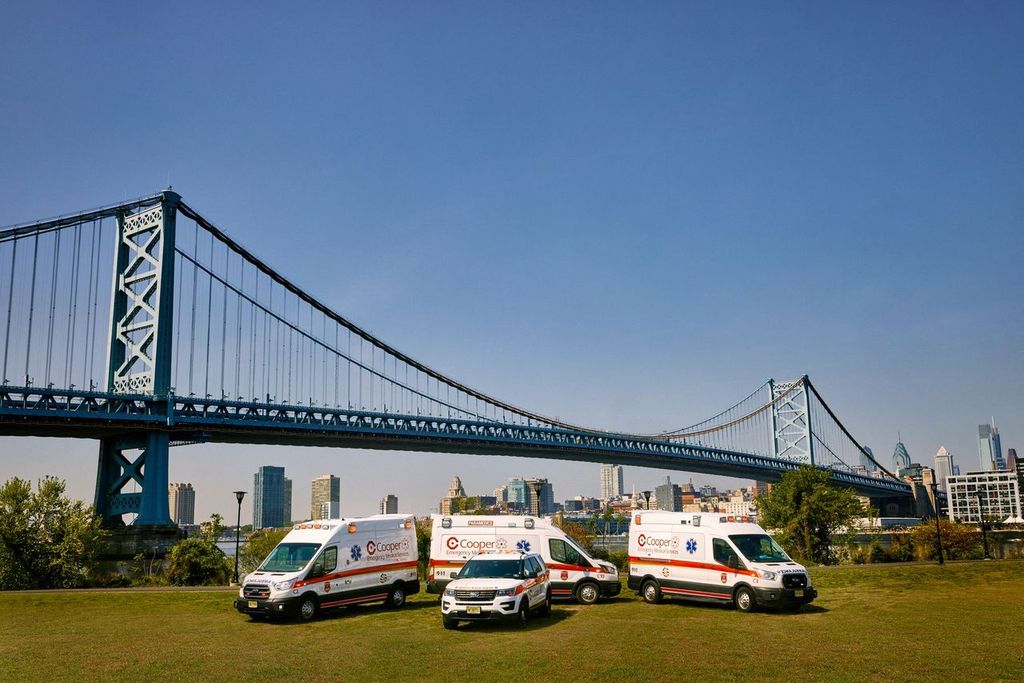
In addition to emergency response, Cooper EMS has played a pioneering role in addressing the opioid crisis. In 2019, working with Cooper’s Addiction Medicine division, Cooper EMS became the first EMS agency in the nation to carry buprenorphine on its Mobile Intensive Care Unit ambulances, allowing paramedics to initiate treatment for patients experiencing acute withdrawal after an opioid overdose was reversed. The program, approved by the New Jersey Commissioner of Health, has since served as a national model. In March, Cooper EMS advanced this groundbreaking approach by becoming the first EMS system in the United States to carry and administer long-acting injectable buprenorphine in ambulances, further expanding treatment for opioid use disorder in the prehospital setting.
“This model not only brings critical treatment directly to patients, but it also creates new opportunities for paramedics to expand their skills and careers,” said Rick Rohrbach, MBA, BSN, RN, CFRN, CCRN, MICP, assistant vice president of EMS and Air Transport Operations at Cooper Norcross Health. “Paramedics have long been trusted prehospital clinicians. Through programs like this, their role is evolving to include community-based care, prevention, care coordination, and other public health services that can improve outcomes well beyond the initial emergency.”
Cooper Norcross Health EMS also provides extensive community outreach, education, and training, including Stop the Bleed programs for first responders, schools, community organizations, and residents. Over the past decade, the department has been featured extensively in local, regional, and national media—including CBS Mornings and CNN—for its innovation in emergency medical services, clinical leadership, and commitment to community-centered care.
The program will initially operate for one year, with the potential for extension based on outcomes and continued funding.
About Cooper Norcross Health
Cooper Norcross Health, formerly Cooper University Health Care, is a leading academic health system affiliated with Cooper Norcross Medical School of Rowan University. Headquartered in Camden, New Jersey, Cooper Norcross Health has revenues of more than $3 billion and an A+ credit rating from both S&P and Fitch Ratings.
Cooper Norcross Health has nearly 14,000 team members, including more than 2,200 nurses, more than 1,200 employed physicians representing 95 specialties and subspecialties, and more than 700 advanced practice providers.
The health system operates MD Anderson Cancer Center at Cooper as well as four hospitals – its 663-bed flagship Cooper Norcross University Hospital in Camden, its 229-bed Cooper Norcross University Hospital Cape Regional in Cape May Court House, Children’s Hospital at Cooper Norcross Health in Camden, and The Recovery Village Cherry Hill at Cooper, a rehabilitation and inpatient treatment facility for substance use disorders, in partnership with Advanced Recovery Systems.
Cooper Norcross University Hospital in Camden is the only Level 1 Trauma Center in South Jersey and the busiest in the region. The hospital has been recognized as a top-performing regional hospital by U.S. News & World Report’s Best Hospitals annual survey for eight years.
More than 2.54 million patients visit Cooper Norcross Health facilities annually. Its ambulatory network encompasses three outpatient surgery centers, seven urgent care centers, a wound care center, and more than 130 physician, physical therapy, and radiology offices extending from the Delaware River to the New Jersey shore.
###