As South Jersey’s only Level I Trauma Center, Cooper partners with EMS agencies and air medical programs to bring whole blood directly to critically injured patients before they reach the hospital
(CAMDEN, NJ) — Cooper University Health Care has reached a major milestone in trauma care, administering its 1,000th whole blood transfusion to a critically injured patient. As South Jersey’s only Level I Trauma Center, Cooper leads the region in advancing trauma care by expanding access to whole blood beyond the hospital in the field through partnerships with emergency medical services throughout the area.
Cooper operates the busiest trauma center in the Philadelphia region and was among the first in the nation to implement whole blood transfusions for severely injured patients, launching its program in 2016. Since then, the academic health system has continued to innovate, recognizing that for patients suffering life-threatening blood loss, every minute matters.
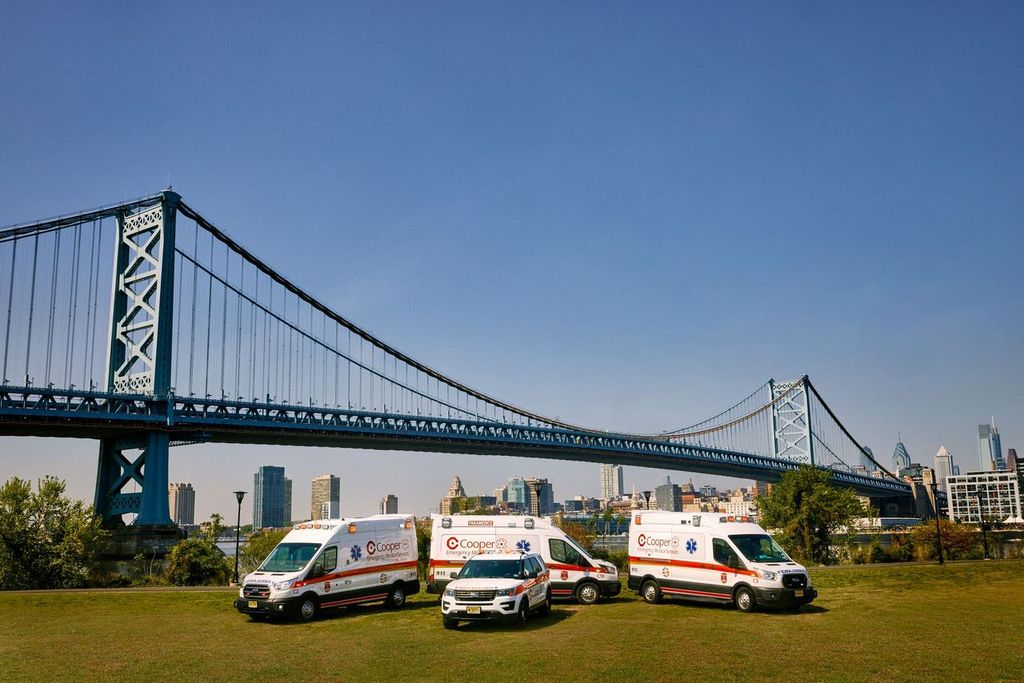
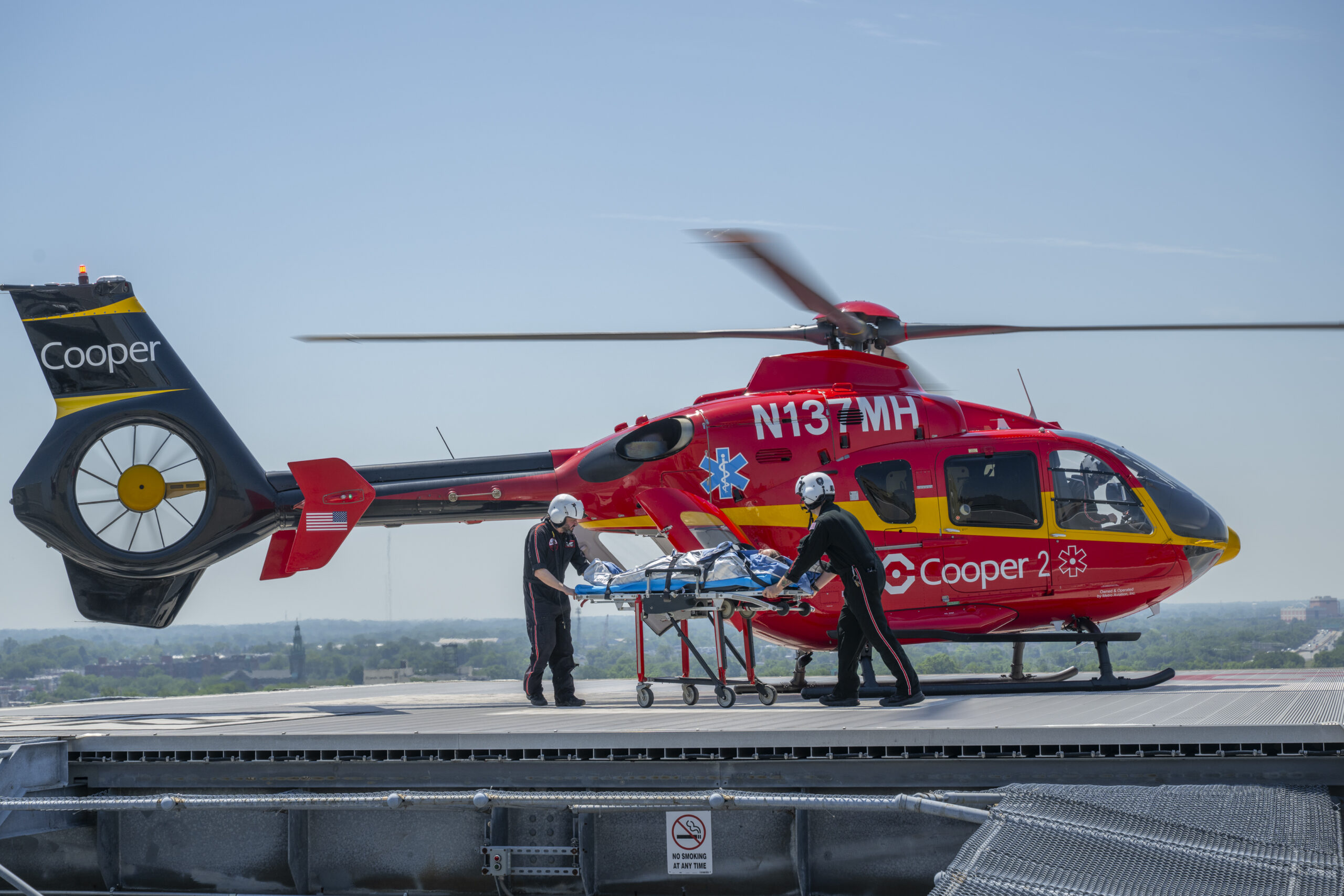
Today, whole blood is available wherever patients may need it: within Cooper’s Trauma Center, aboard Cooper Air medical helicopters, through Cooper EMS physicians, and with regional EMS partners including Virtua Advanced Life Support (ALS), SouthStar EMS, and Inspira ALS. These collaborations ensure that critically injured patients can begin receiving lifesaving blood transfusions at the scene of an injury or while they are being transported to Cooper.
“Reaching 1,000 whole blood transfusions is an important milestone because it represents saved lives and decades of innovation in trauma care,” said John M. Porter, MD, head of the Division of Trauma Surgery and director of the Center for Trauma Services at Cooper University Health Care. “Severe bleeding remains one of the leading causes of preventable death after traumatic injury. By bringing whole blood directly to patients through our EMS and air medical partners, we’re giving people the best possible chance of surviving devastating injuries.”
Whole blood contains red blood cells, plasma, and platelets together in their natural balance. Unlike traditional component therapy, whole blood replaces what patients have lost in a single transfusion, helping restore oxygen delivery, maintain blood pressure, and support clotting during the earliest, and often most critical, moments following traumatic injury.
Since expanding the program into the prehospital environment, Cooper and its regional partners have documented numerous cases in which early whole blood transfusions have stabilized critically injured patients before they arrived at the trauma center. Early transfusion has also reduced the amount of blood many patients require after reaching the hospital, improving outcomes while strengthening the continuum of trauma care across South Jersey.
As a leading academic health system, Cooper’s leadership extends beyond today’s program. The health system continues to work with regional EMS agencies, state partners, and researchers to advance trauma care, including exploring emerging technologies such as drone delivery of blood products to emergency scenes through research conducted by Cooper’s Military, Diplomatic Affairs and Field Medicine program.
The success of the regional whole blood initiative reflects the close collaboration among trauma surgeons, emergency physicians, flight crews, paramedics, blood bank specialists, and EMS agencies who share a common goal: delivering lifesaving care as quickly as possible.
About Cooper’s Level I Trauma Center
Cooper University Health Care’s Level I Trauma Center in Camden has been a leader in trauma care in South Jersey for more than four decades. Established in 1982, Cooper’s Trauma Center was the first in the region and today remains the only Level I Trauma Center serving southern New Jersey. As the region’s busiest trauma center, Cooper treats more than 5,000 trauma patients each year and serves as the referral center for critically injured patients across the region.
Cooper’s comprehensive trauma program includes specialized adult and pediatric trauma units, a dedicated Trauma/Surgical Intensive Care Unit, Cooper Air medical transport with two helicopters, and South Jersey’s only ACS-verified Level II Pediatric Trauma Center.
About Cooper University Health Care
Cooper University Health Care is a leading academic health system affiliated with Cooper Medical School of Rowan University. Cooper, headquartered in Camden, New Jersey, has revenues of more than $3 billion and an A+ credit rating from both S&P and Fitch Ratings.
Cooper has nearly 14,000 team members, including more than 2,200 nurses, more than 1,200 employed physicians representing 95 specialties and subspecialties, and more than 700 advanced practice providers.
Cooper operates MD Anderson Cancer Center at Cooper as well as three hospitals – its 663-bed flagship Cooper University Hospital in Camden, its 229-bed Cooper University Hospital Cape Regional in Cape May Court House, and Children’s Regional Hospital in Camden.
Cooper University Hospital in Camden is the only Level 1 trauma center in South Jersey and the busiest in the region. The hospital has been recognized as a top-performing regional hospital by U.S. News & World Report’s Best Hospitals annual survey for six years.
More than 2.54 million patients visit Cooper’s facilities annually. Cooper’s ambulatory network encompasses three outpatient surgery centers, seven urgent care centers, a wound care center, and more than 130 physician, physical therapy, and radiology offices extending from the Delaware River to the New Jersey shore.
Cooper was named one of America’s Best Large Employers for 2026 by Forbes, ranking among the top 200 in the nation. Visit CooperHealth.org to learn more.
###