
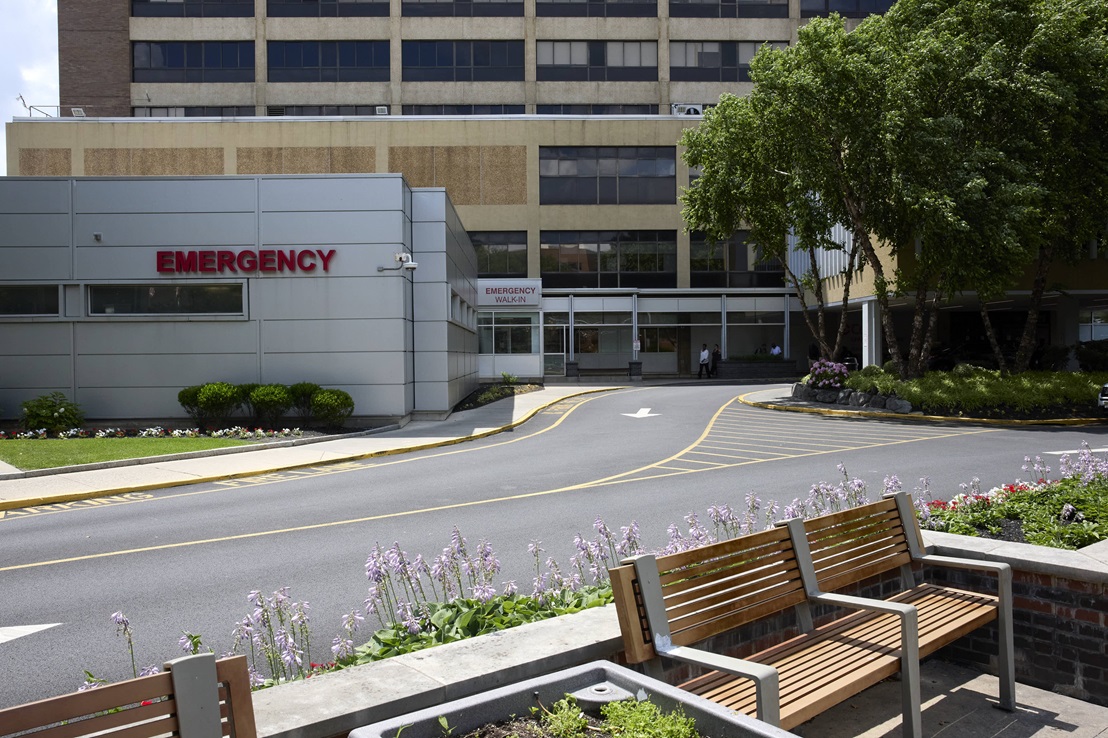
 Camden, NJ — Cooper University Health Care announced today that the Emergency Department at Cooper University Hospital has been reaccredited as a Geriatric Emergency Department (GED) by the American College of Emergency Physicians (ACEP), earning Level 3 (Bronze) Geriatric Emergency Department Accreditation (GEDA). The designation, first obtained in 2022, recognizes Cooper’s commitment to delivering high-quality, specialized emergency care for older adults.
The Geriatric Emergency Department Accreditation program was developed by ACEP to recognize emergency departments that meet rigorous standards for the care of older patients. Accreditation signals to patients and families that an emergency department is equipped with the expertise, processes, and environment needed to address the unique medical and social needs of aging adults.
Cooper’s GEDA accreditation reflects the leadership and collaboration of an interdisciplinary team, including Katherine Selman, MD, Zack Cutaneo, MSN, RN, and colleagues across emergency medicine, nursing, and hospital operations.
“The needs of older adults in the emergency setting are complex and often distinct from those of younger patients,” said Michael E. Chansky MD FAAEM, chairman of the Department of Emergency Medicine at Cooper, and professor of Emergency Medicine at Cooper Medical School of Rowan University. “This accreditation affirms Cooper’s focus on providing age-appropriate, patient-centered care that prioritizes safety, dignity, and better outcomes for our older community members.”
The GEDA program is the culmination of years of progress in geriatric emergency medicine. In 2014, ACEP partnered with the Society for Academic Emergency Medicine, the Emergency Nurses Association, and the American Geriatrics Society to develop national guidelines for geriatric emergency care. These guidelines recommend best practices such as geriatric-friendly equipment, specialized staff education, and routine screening for conditions including delirium, dementia, fall risk, and other age-related vulnerabilities.
The voluntary accreditation program includes three levels—similar to trauma center designations—and outlines more than two dozen best practices for geriatric emergency care. To achieve Level 3 accreditation, emergency departments must demonstrate incorporation of many of these practices, provide interdisciplinary geriatric education, and ensure the availability of geriatric-appropriate equipment and supplies.
About Cooper University Health Care
Cooper University Health Care is a leading academic health system affiliated with Cooper Medical School of Rowan University. Cooper, headquartered in Camden, New Jersey, has revenues of more than $2.4 billion and an A+ credit rating from both S&P Global and Fitch Ratings.
Cooper has nearly 14,000 team members, including nearly 1,600 nurses, more than 1,000 employed physicians representing 95 specialties and subspecialties, and more than 700 advanced practice providers.
Cooper operates MD Anderson Cancer Center at Cooper as well as three hospitals – its 663-bed flagship Cooper University Hospital in Camden, its 229-bed Cooper University Hospital Cape Regional in Cape May Court House, and Children’s Regional Hospital also in Camden.
Cooper University Hospital in Camden is the only Level 1 trauma center in South Jersey and the busiest in the region. The hospital has been recognized as a top-performing regional hospital by U.S. News & World Report’s Best Hospitals annual survey for six years.
More than 2.4 million patients visit Cooper’s facilities annually. Cooper’s ambulatory network encompasses three outpatient surgery centers, several urgent care centers, a wound care center, and more than 130 physician, physical therapy, and radiology offices extending from the Delaware River to the New Jersey shore.
Cooper was named one of America’s Best Large Employers for 2025 by Forbes, ranking among the top 200 in the nation.
Visit CooperHealth.org to learn more.
###