
 (Cape May Court House, NJ) – On Tuesday, March 17, 2026, Cooper University Hospital Cape Regional welcomed 45 kindergarten students from Glenwood Avenue Elementary School in Wildwood, NJ, for the debut of Teddy Goes to Cape, a hands-on educational program designed to introduce young children to the health care environment in a fun, supportive, and approachable way.
The visit reflects Cooper’s growing commitment to bringing care, education, and wellness resources closer to home for families throughout Cape May County and surrounding shore communities. Through programs like Teddy Goes to Cape, Cooper is expanding opportunities for young residents to learn about health and health care in an engaging environment while building familiarity and trust with their local hospital.
“Programs like Teddy Goes to Cooper reflect our commitment to meeting families where they are and building trust in health care from an early age,” said Philip A. Norcross, Esq., chairman of The Cooper Foundation Board. “As Cooper continues to grow across South Jersey, expanding initiatives like this from Camden to Cape May County helps ensure children and families throughout the region feel supported and connected to their local hospital.”
The event builds on a longstanding partnership between The Cooper Foundation (formerly the Cape Regional Foundation) and Glenwood Avenue Elementary School. Cooper University Hospital Cape Regional physicians, staff, and volunteers have supported the school community through holiday toy drives, collections of winter essentials, food drives, and participation in the school’s Adopt-A-Family program. Since Cape Regional’s merger with Cooper University Health Care, the partnership has expanded to include health-focused seminars, assemblies, and educational sessions centered on wellness and healthy habits.
This year marked an expansion of that collaboration, bringing students directly into the hospital for an immersive medical learning experience. Upon arrival, each student received a Cooper Foundation bag containing a teddy bear, coloring page, sunglasses, and a registration sheet to complete at the triage table. Students then rotated through child-friendly interactive stations representing different areas of health care, where they “treated” their teddy bears while learning about medical care in an engaging environment.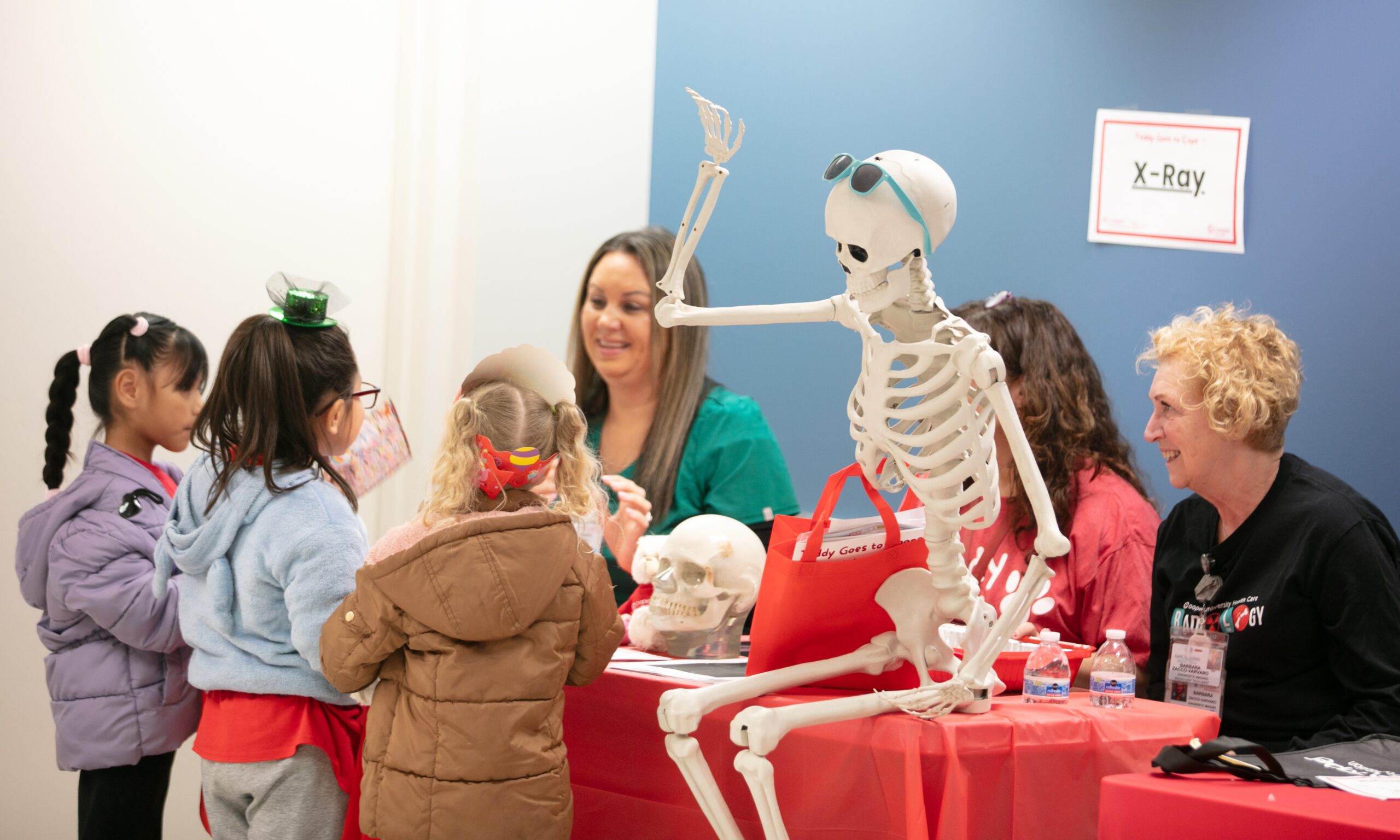
“When children can explore a hospital in a playful, hands-on way, it helps remove fear and replaces it with curiosity and confidence,” said Max Kursh, administrative director, Community and Population Health at Cooper. “Programs like Teddy Goes to Cape are a meaningful way to introduce healthy habits and show young students that health care spaces are places of support, learning, and care.”
Students participated in a triage check-in, physical exams using child-friendly ENT and heart-check tools, orthopaedic and bone assessments, a teddy “X-ray” experience in radiology, and hands-on demonstrations in the Emergency Department focused on bandaging and basic first-aid concepts. Additional stations highlighted rehabilitation services, healthy eating and nutrition, infection prevention and hand hygiene, and emergency medical services, including a pulse oximeter demonstration. Students also toured a Cooper ambulance and learned about emergency response.
Teddy Goes to Cape was made possible through a partnership between The Cooper Foundation and Cooper’s Community and Population Health and Community Events teams. The program was offered free of charge thanks to the generosity of donors and reflects Cooper’s ongoing commitment to supporting families and promoting wellness throughout Cape May County.
“We are grateful to the donors and community partners whose generosity makes programs like this possible,” said Lisa Morina, senior vice president and chief philanthropy officer of The Cooper Foundation. “Through partnerships like this one with Glenwood Avenue Elementary School, we are able to create engaging experiences that support children, families, and communities throughout Cape May County.”
By blending education with empathy and play, Teddy Goes to Cape helps reduce fear, inspire curiosity, and empower children to feel confident and safe when visiting a doctor or hospital — whether for themselves or a loved one.
About The Cooper Foundation
The Cooper Foundation advances extraordinary care through philanthropy. We strengthen patient services, advance research, and invest in education across Cooper University Health Care. So care can reach further, innovation can move faster, and communities can thrive. Learn more:
Facebook │ Instagram │ LinkedIn │ X │ TikTok │ YouTube │ Flickr │ foundation.cooperhealth.org
About Cooper University Health Care
Cooper University Health Care is a leading academic health system affiliated with Cooper Medical School of Rowan University. Cooper, headquartered in Camden, New Jersey, has revenues of more than $2.4 billion and an A+ credit rating from both S&P Global and Fitch Ratings.
Cooper has nearly 14,000 team members, including nearly 1,600 nurses, more than 1,000 employed physicians representing 95 specialties and subspecialties, and more than 700 advanced practice providers.
Cooper operates MD Anderson Cancer Center at Cooper as well as three hospitals – its 663-bed flagship Cooper University Hospital in Camden, its 229-bed Cooper University Hospital Cape Regional in Cape May Court House, and Children’s Regional Hospital also in Camden.
Cooper University Hospital in Camden is the only Level 1 trauma center in South Jersey and the busiest in the region. The hospital has been recognized as a top-performing regional hospital by U.S. News & World Report’s Best Hospitals annual survey for six years.
More than 2.4 million patients visit Cooper’s facilities annually. Cooper’s ambulatory network encompasses three outpatient surgery centers, seven urgent care centers, a wound care center, and more than 130 physician, physical therapy, and radiology offices extending from the Delaware River to the New Jersey shore.
Cooper was named one of America’s Best Large Employers for 2026 by Forbes, ranking among the top 200 in the nation.
Visit CooperHealth.org to learn more.
###